

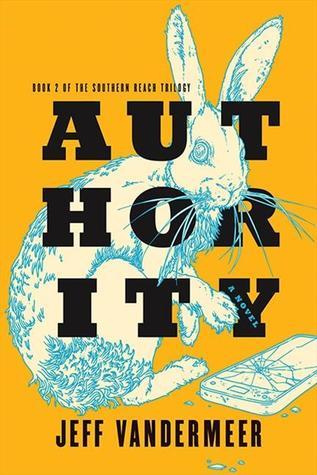
Authority is a 2014 science fiction horror novel by Jeff VanderMeer and the second novel in the Southern Reach trilogy. Following the disastrous 12th expedition into Area X, the Southern Reach (the organization in charge of containing and researching Area X) is in complete disarray. Members of the last expedition have returned under mysterious circumstances, the same as the 11th, except for the psychologist, who was also the Southern Reach’s director. Now, despite being an outsider, John Rodriguez (aka “Control”) must take the helm as acting director. Through a series of interrogations, briefings with staff, and reviews of disturbing videos and other documentation, Control must uncover the secrets of Area X and try to salvage the institution’s handling of it, something he soon realizes is deteriorating faster than anybody is willing to admit.
I don’t know where I got this impression, but after Annihilation, a novel that follows the first-person field log of an unnamed biologist on an expedition into the mysterious Area X, I expected the second book to be markedly different. Perhaps it was the title itself that inspired such confidence in this. Where the first book was nebulous and limited by a singe person’s account, I anticipated that Authority would be a more traditional narrative, not something epistolary, giving us a more concrete look behind the scenes of the Southern Reach and the knowledge it has accrued, ultimately shedding some light on what Area X really is and what’s going on there. In a lot of ways, I feel my expectations were spot on, but they were also very wrong.
It’s something of a marvel how much this novel is a different beast from its predecessor, with its significant change in narrative frame and format, setting, and protagonist, but it maintained something fundamental about the first book that wonderfully worms its way into the new variables in this second one. This fundamental factor is that, while it is fairly accurate to label these books science fiction and horror, this follow-up cemented the Southern Reach trilogy in my mind as Weird fiction. I’m surprised that this book left this impression on me more, as the uncanny landscapes and strange metamorphoses that characters undergo in the first one certainly signaled this clearly, but something about the stagnant, modernist setting of a decaying government agency that doesn’t have a clue really drove this idea home.
The Southern Reach inspires sensations of oppressive fluorescent lighting, stale coffee, and the reek of floor cleaner; what was once, perhaps, a bustling office with staff and scientists eager to research Area X is a place that evokes great impotence, to an almost surreal degree. Regardless of the meetings Control attends, the long-term employees he debriefs, and the old director’s files that he rightfully plunders for information, it never feels like he’s gaining even a tenuous grasp on what Area X is or what they can do about it. The only thing that feels grounded as he tries to orient himself in his new role are his interviews with the biologist, yet even then, if you paid proper attention to Annihilation, we as readers know that she isn’t even who everybody thinks she is.
Despite the seeming incompetence of this organization, their collection of data is legitimately captivating; there is actually expedition footage for Control to review, and much of it is strange at best and downright disturbing and baffling at worst. The gateway into Area X itself seems to defy sense as well, ditto the border that seems unsafe to cross, though what it does to things that do remains unclear. Both we as the reader and Control himself struggle coalesce all of this information and the state of the Southern Reach into something understandable, with the only prevailing feeling being that something is deeply wrong in this place, but we can’t put our finger on what.
Though I remember this rather fondly as an atmospheric experience of modernist dread in the face of the wild unknown, it sticks out like a sore thumb just how much this reading experience dragged for me. In the process of building this foreboding sense, Control is doing a lot without getting a lot done; for a substantial chunk of the book, it frustratingly felt like it was going nowhere, and I’m of two minds about this because I can see how this is artfully contributing to the substance of the narrative, that government bureaucracy and even science struggle with biological horrors beyond their comprehension, but I wasn’t always having the greatest of times reading it either. It’s more in retrospect that I can better appreciate it. Once things do kick off, however, the story does gain some momentum that carries it to its conclusion really well.
Over the course of this journey, we learn a lot about our determined protagonist, Control, which is also in stark contrast to the biologist of the first novel, whom we learn some details about but also had a lot of walls up as a person. Though Control is possessed of some competence as a government agent, he has had a flailing career due to some unfortunate missteps, and he manages to keep a career in no small part thanks to his mother, a decorated agent and absentee parent in his childhood who nevertheless casts a domineering shadow over him. I was more invested in Area X, personally, but enjoyed these deeper dives into his backstory and characterization too, especially as they come to connect with the forces that brought him to his position at the Southern Reach in the first place and how they are using him to their own ends.
Final Thoughts
Authority is a really good piece of Weird fiction, science fiction, and horror, cultivating an atmosphere where understanding is hard to pin down, despite the implied authority of an institution such as the Southern Reach, and dread, confusion, and a vague sense of wrongness permeate the narrative. This served as a double-edged element, however, as gaining an understanding and righting the ship, so to speak, were primary goals of our main character, so it felt like the narrative was just spinning its wheels a little too often. Nevertheless, it was a good, unique continuation of the trilogy with an ending that has me eager to pick up the next book.
My Rating: 3.5 out of 5
 Muse with Me