

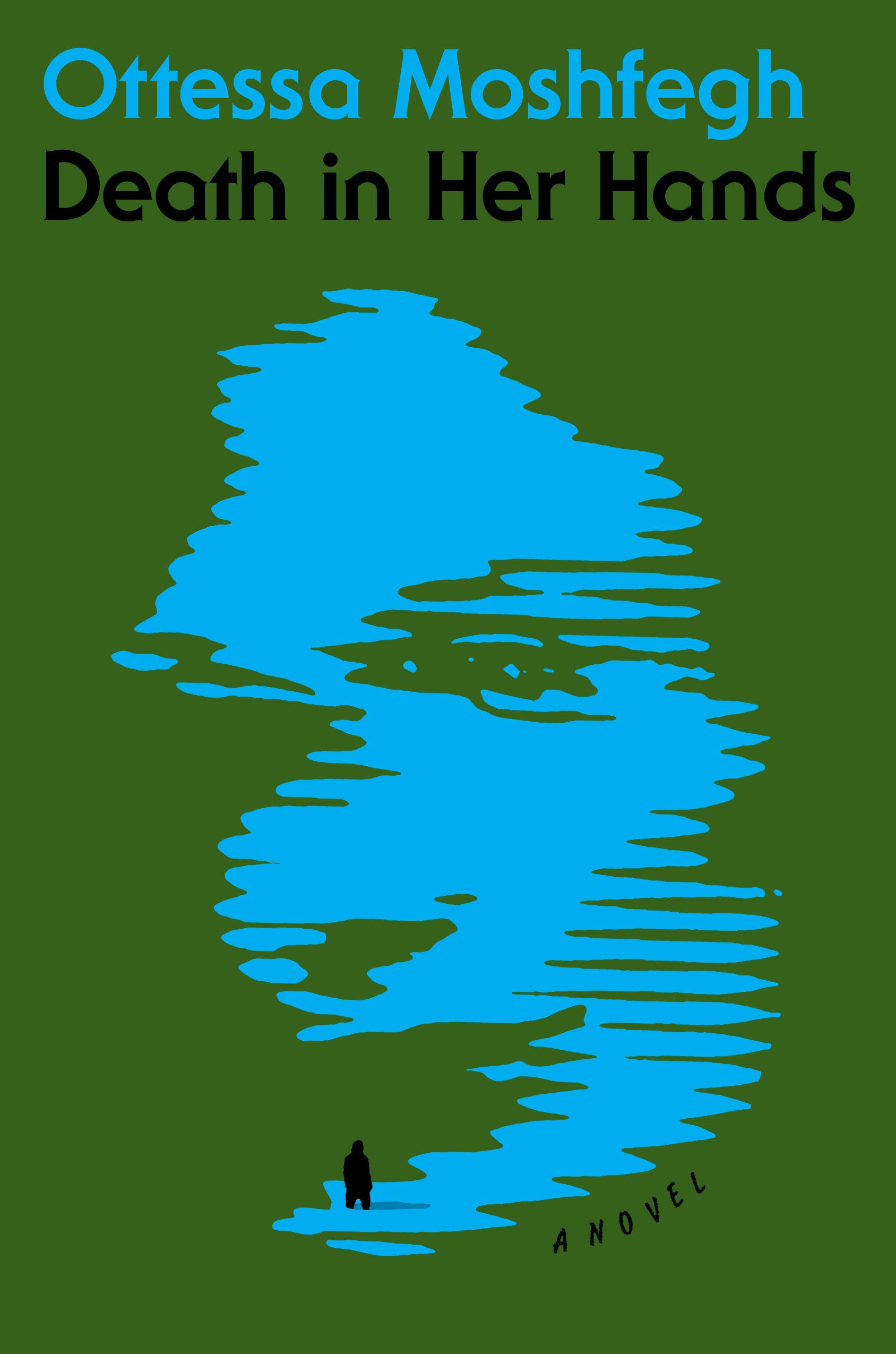
Death in Her Hands is a 2020 mystery novel by Ottessa Moshfegh. Vesta Gul is an elderly widow who lives alone in a cabin in the woods in a small town, alongside her beloved dog Charlie. One day, while walking Charlie along the nearby trails, she finds a note on the ground, held there by carefully placed stones. The note reads “Her name was Magda. Nobody will ever know who killed her. It wasn’t me. Here is her dead body.” Though there is no dead body to speak of and seemingly not a single other soul for miles around, Vesta is disturbed by what she has found and makes it a personal mission to unravel this mystery.
Though I’ve perhaps truncated the summary somewhat here, this is the most essential aspect of the book, the big piece of information that will surely grab the most attention. What’s more tantalizing than a mysterious note, an absentee body, and a supposed murder to solve? And what can this unassuming old woman possibly do to solve these mysteries? The blurb of this book invites plenty of speculation, presenting the prospective reader with details so simple yet alluring that your imagination is likely to run wild in anticipation. I know that mine did, and it is that line of thinking that is a big part of what this novel is really about.
What unravels in this novel is not, in fact, a murder mystery but a deeply intimate look into the mind of a troubled, anxious woman in the twilight of her life. Vesta is certainly determined to uncover the apparent mystery she has discovered, but she’s a rather unremarkable woman in the way that most everyday people are and isn’t actually equipped to solve such a thing, especially with no evidence to speak of. Instead, we follow her along in her mundane day-to-day life as she weaves an elaborate web in her mind of exactly who she thinks Magda was, the life she was leading, and the circumstances around her demise.
She delves so deeply into this that the skeleton of a narrative is slowly constructed, such that you could be forgiven for going along with Vesta and forgetting that the conclusions she’s drawing came out of thin air. In some respects, this was enjoyable simply as an exercise in watching the creative process. She even starts putting together notes about important characters around Magda (all invented by Vesta), suspects or otherwise, delving into their desires, disappointments, and personal histories that make them who they are, almost like character sheets. Though essentially nothing is actually happening in the greater narrative, I enjoyed this a fair amount, especially when it felt like she was starting to shift towards legitimate creative writing, the inciting mystery merely serving as a catalyst that could perhaps be forgotten.
At times, I did find myself a little annoyed that this book was seemingly going to be about events completely imagined by this woman, with no real basis in the reality of the fiction at all. Simultaneously, I couldn’t help but find this complaint amusing from a metafictional standpoint—being upset that these imagined events are largely about something imagined, not events imagined to have really happened. The story Vesta slowly puts together is just as real as Vesta herself, ultimately, so why not become at least a little invested alongside her?
That all being said, an elephant in the room is Vesta’s unfortunate state of mind. This is not simply a story about an isolated old woman spurred into weaving a narrative after coming across something strange and inspiring. She is also a deeply unreliable narrator, and it becomes difficult to determine what mishaps around her are possibly related to the mystery, imagined, or even perpetrated by her own hand and then forgotten about. This inspired complicated feelings.
On the one hand, much of Vesta’s anxious feelings clearly stem from her late husband, whom we learn about as she reflects upon her own life during her stream-of-consciousness speculations. Though she seemed to depend on him in some ways, she was frequently belittled by him and repressed. Her behaviour does suggest that his mockery of her shortcomings may have somewhat reflected reality, regardless of how unkind that was, but it is just as plausible that he molded her into somebody who would struggle to keep themselves emotionally stable and reasonable too, making it easy to feel some sympathy for her. Though she is making up details about Magda, she is also exercising agency that it seems was kept from her for a long time; she is independent and on her own, free to speculate and make up her own mind without risk of ridicule.
On the other hand, living on her own like this we see her engaging in a lot of antisocial behaviours and being very standoffish and inwardly judgemental of the people around her, giving me a negative perception of her that made me at times dislike her flights of fancy and just how unreliable she is as a narrator. In particular, she starts to become neglectful in the treatment of her dog Charlie, which especially touched a nerve with me. Having such unlikable facets and with no firmer ground to stand on in terms of narrative (metafictional ideas notwithstanding), it was hard not to become impatient with her daft behaviour, as it started to shift towards the dangerous until becoming something altogether tragic and upsetting.
Final Thoughts
Though there is definitely value in Death in Her Hands as a reading experience, I couldn’t help but leave it feeling frustrated and more than a little dissatisfied. Moshfegh’s writing is well crafted as always and allowed deep and nuanced insight into the mind of a uniquely troubled individual, but Vesta’s perspective was perhaps too unreliable for its own good. Even in cases where I sympathize with her, I have to wonder how reliable much of anything from her perspective really is; it’s hard to find where to draw the line. I can respect and even appreciate how this text works to subvert and play with mystery fiction, but I needed some firmer ground to stand on, so to speak.
My Rating: 3 out of 5
 Muse with Me